Real Talk on Timeshare Exit Strategies in 2026
How to Get Rid of a Timeshare That is Paid Off?
So, you paid off your timeshare. Maybe you thought you were finally free. No more monthly payments, no more pressure from salespeople in Hawaiian shirts handing out free dinners.
But then the maintenance fees came. And the special assessments. And now it feels like you’re still paying for something you don’t even use. Sound familiar?
You’re not alone. We’ve talked to countless families—people just like you—who feel like they got suckered into a lifetime obligation they never wanted. One couple that contacted us said they paid off their timeshare in 2019 and thought they’d “just keep it for vacations.” Fast forward to 2026: They’re contacting us again and have only used it once, paid over $6,000 in fees, and still can’t unload it through resale.
Let’s talk about why keeping a paid-off timeshare is costing you more than you think—and exactly how to get out.
How to Get Out of a “Paid-Off” Timeshare—and Why Keeping it is Costing You More Than You Think
Owning a timeshare isn’t like owning a home. You don’t gain equity. You don’t build value. In fact, the opposite is true—the value drops like a rock the minute you buy it.
Let’s look at the real cost.
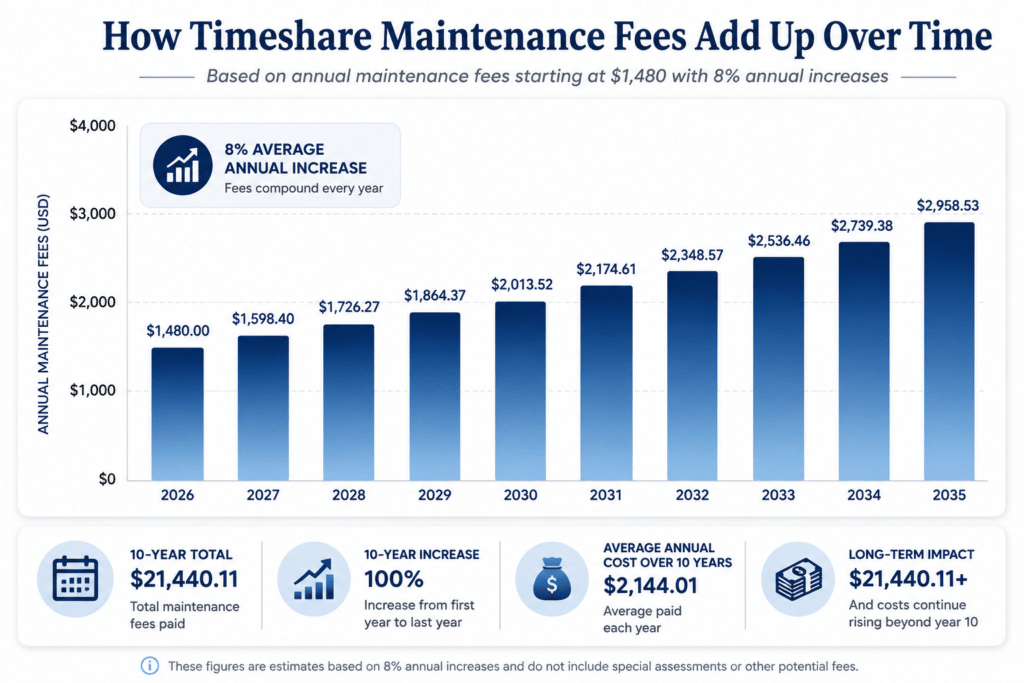
That’s $21,440.11 paid in maintenance fees over a ten year period, whether you use the timeshare or not. Add club dues, special assessments, and exchange fees, and you’re looking at thousands more every decade—for a place you probably stopped going to. Once owners come to this realization, they often begin their search for “how to get out of my timeshare” with results for the “best company to sell timeshare”.
The Truth About Timeshare Resale Scams
If you’ve ever Googled “how to get rid of a timeshare that is paid off,” you’ve probably seen companies promising to sell it “fast” or “guaranteed.”
Let me shoot straight with you: Most of those are scams.
They’ll ask for an upfront fee—anywhere from $500 to $3,000—and then ghost you. Or they’ll string you along while “trying to find a buyer” that doesn’t exist.
We recently spoke to a man in his 60s who paid $2,200 to a resale company—and never heard back. These companies prey on people who are desperate to escape. Don’t fall for it. We hear similar stories from owners contacting us daily to answer their question of how to get rid of their timeshare.
Red Flags in Timeshare Resale Companies
They ask for upfront fees
They guarantee a quick sale
They claim they already have a buyer
They’re not listed with the Better Business Bureau
They pressure you to act fast
How to Get Out of a Timeshare That is Paid Off (The Smart Way)
1. Deed Back Timeshare or Surrender Club Membership
Some resorts now offer “deedback” or surrender programs. You give them the timeshare back, and they release you from ownership. It’s not always guaranteed, and oftentimes there are fees involved, but it’s clean and quick if available.
2. Transfer Ownership
You can legally transfer your timeshare to someone else. Maybe a family member actually wants it (rare, but hey…). You’ll need to file a new deed and notify the management company to ensure the transfer is accepted. If you have a point certificate or right to use contract, you will need to contact your resort to assist you with transferring your timeshare interest to another party.
Just be honest with them about the costs. Don’t stick them with your mistake.
3. Use an Experienced Exit Company
Some companies offer attorney-based exit strategies. The legal experts don’t just file paperwork—they hold your hand through the entire process.
Look for ones vetted by the Better Business Bureau and validate their time in business with the corporation commission in the state where they claim to operate out of.
4. Rent It Out Temporarily
If you’re still planning your exit, renting your week or points can offset annual fees in the short term. You will want to first ensure that renting outside of family members is not prohibited by your resort. Many of the major timeshare developers will lock your account if you violate the no commercial rental policy.
Key Takeaways: How to Get Out of a Timeshare That Is Paid Off
Explore Deedback Programs
Some resorts allow you to surrender the timeshare.
It’s fast and clean if offered, though may include fees.
Not guaranteed and varies by resort.
Transfer Ownership Legally
You can transfer the timeshare to another person.
Requires updated deed filing (if applicable) and resort acceptance.
Be transparent about costs and responsibilities to avoid conflict.
Hire a Reputable Exit Company
Use experienced companies with attorney-supported strategies for legal support.
Check BBB ratings and verify how long they’ve been in business.
Avoid scams by confirming filings with the state corporation commission.
Rent It Out (With Caution)
Renting your timeshare can help cover fees while planning your exit.
Always check resort rules—some ban commercial rentals and may lock your account.
What to Expect During Timeshare Exit in 2026
It can take a few months to over a year to break free from your paid off timeshare
You may owe one more annual fee depending on the timing if you transfer your timeshare
You’ll need to sign legal documents—do it right or don’t do it at all as it can cloud title
You’re Not Trapped—You’re in Control
Let’s be clear: You’re not powerless. You may feel stuck, but there are legitimate ways out. Just like digging out of debt, escaping your timeshare is about facing the truth and taking action.
This is about taking back control of your money, your time, and your peace of mind.
Don’t keep paying for past mistakes—learn from them and move forward. That paid-off timeshare isn’t an asset. It’s a liability. And it may be time to break free from it.
Next Steps to Get Out of a Timeshare
Call your resort and ask about deedback or surrender options.
Research exit companies with a strong online reputation and validate their time in business.
Stay vigilant—if it sounds too good to be true, it is.
Feeling stuck in a paid-off ownership can be incredibly frustrating—but learning how to get rid of a timeshare that is paid off gives you a clear path forward. You don’t have to keep paying for something that no longer serves you. If you’re ready to move on, simply complete the eligibility form below. It’s your chance to reclaim control, reduce unnecessary costs, and start focusing on what truly matters.
Frequently Asked Questions (FAQ)
What is the easiest way to get rid of a paid-off timeshare?
The easiest way to get rid of a paid-off timeshare is through a deedback (or surrender) program if your resort offers one. It’s usually the fastest and cleanest option because you return the ownership directly to the resort and get released from future obligations. However, availability and fees vary by resort.
What companies help owners get rid of paid-off timeshares?
If you own a paid-off timeshare and want to get rid of it, you have several options, including working with companies that specialize in timeshare exit. While it’s true that the industry has its share of scams, there are also legitimate timeshare exit companies that provide reliable, professional solutions.
The key is knowing how to separate the trustworthy companies from the bad actors. Start by verifying that the company has more than 10 years in business, and confirm this through official state corporate filings—this helps ensure long-term stability and legitimacy.
You should also review their online reputation across multiple platforms, not just one. Look for consistent, positive feedback on:
Better Business Bureau (BBB)
Trustpilot
Google Reviews
BestCompany.com
Yelp
A reputable company will have a strong, transparent presence across these sites, along with clear communication about their process, timelines, and fees. Taking these steps can help you confidently choose a legitimate partner and avoid costly scams.
Can I sell my paid-off timeshare on the resale market?
Technically, yes—but in reality, it’s very difficult. Most timeshares have little to no resale value, and many listings go unsold for years. Be especially cautious of companies that promise a quick sale or ask for upfront fees, as these are common signs of resale scams.
Why do I still have to pay fees if my timeshare is paid off?
Even after you’ve paid off the loan, you’re still responsible for annual maintenance fees, special assessments, and club dues. These costs are ongoing and required to maintain the property, which is why a paid-off timeshare can still feel like a financial burden.
How much does it cost to get out of a timeshare?
The cost can vary depending on the exit method:
Deedback programs may include administrative fees
Exit companies may charge for legal or professional services
Transfers may include deed and closing costs
Even if there are upfront costs, many owners find it’s cheaper than continuing to pay fees year after year.
Are timeshare exit companies legit?
Some are—but many are not. A legitimate timeshare exit company should:
Have a strong track record and verified business history
Be transparent about fees and timelines
Avoid making unrealistic guarantees
Always research reviews, check business credentials, and avoid companies that pressure you to act quickly.
What are the red flags of a timeshare resale scam?
Watch out for these warning signs:
Requests for upfront fees
Promises of a guaranteed or fast sale
Claims they already have a buyer
Lack of accreditation or online presence
High-pressure sales tactics
If it sounds too good to be true, it usually is.
Can I give my timeshare to a family member or friend?
Yes, you can transfer ownership to someone else—but it must be done legally. This usually involves:
Filing a new deed (if applicable)
Getting approval from the resort
Ensuring the new owner understands all ongoing costs
It’s important to be honest so that they understand they are accepting a liability with mandatory rising costs annually.
Is renting out my timeshare a good way to get out?
Renting can help offset maintenance fees temporarily, but it’s not a long-term solution for getting out. Also, some resorts prohibit renting or restrict it, so always check your contract before listing your unit.
How long does it take to get out of a timeshare?
On average, it takes 3 to 12 months to fully exit a timeshare, depending on the available methods for your resort and circumstances.
Is a paid-off timeshare considered an asset?
No—most timeshares are considered a liability, not an asset. They typically depreciate in value and come with ongoing costs, which is why many owners eventually look for ways to exit.
What should I do first if I want to get rid of my timeshare?
Start with these steps:
Contact your resort and ask about deedback or surrender options
Review your contract and ownership details
Research reputable exit companies if needed
Stay alert for scams and avoid upfront-fee resale offers
Taking these steps will help you move forward safely and confidently.